Kum, Dever, Star Svat: Macedonian Wedding Party Roles
What the dever, kum, kuma and star svat actually do, who pays for what, and how to ask people to take a role
Quick answer
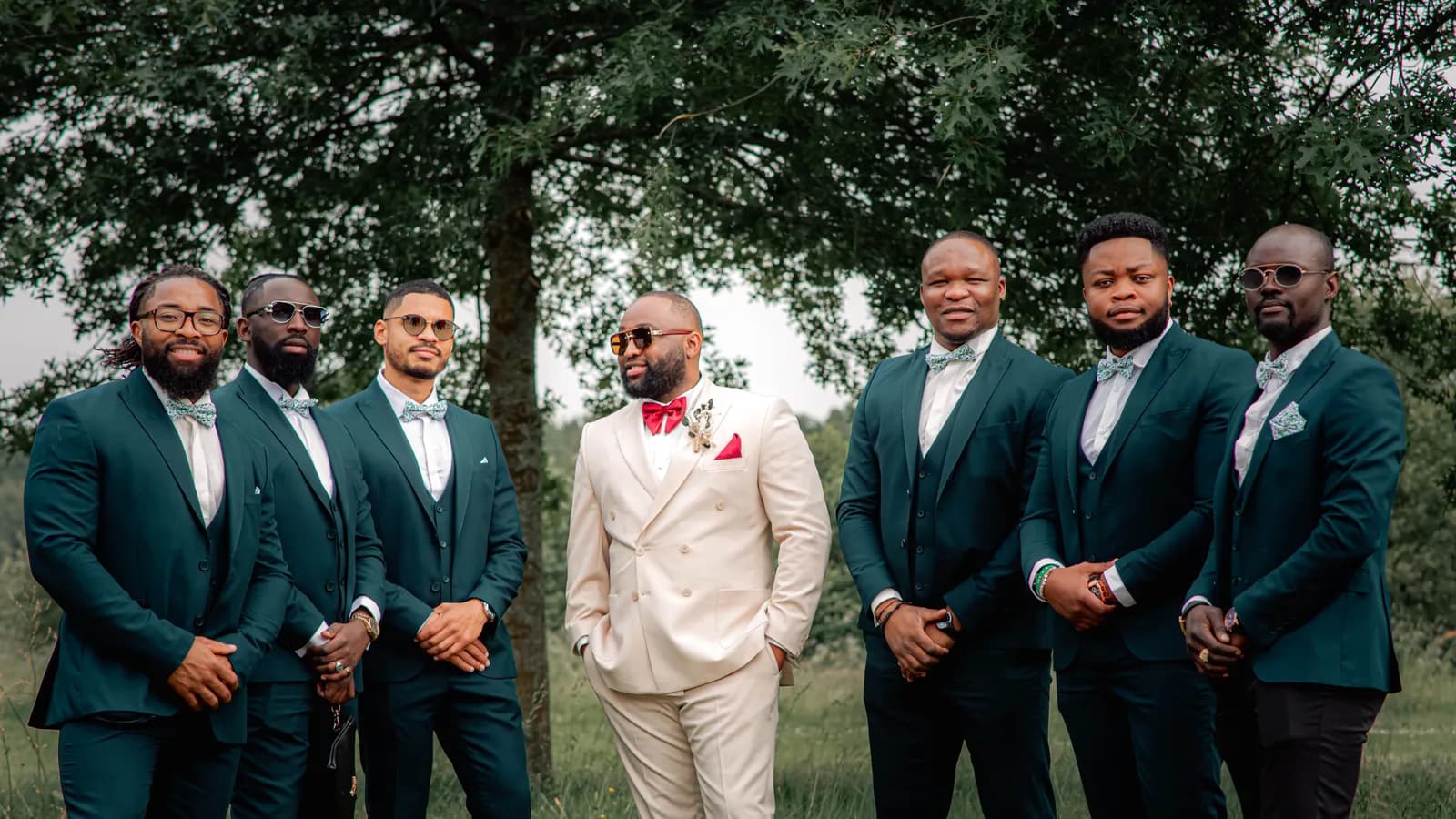
The dever is the groom's closest companion, traditionally an unmarried brother or close relative: he fetches the bride with him, pays the “ransom” at her door, carries the rings and stays by his side all day. The kum is the marriage witness and, by custom, buys the candles and covers part of the church costs. The kuma stays with the bride; the star svat is a respected older man.
Key takeaways
- The dever is traditionally the groom's unmarried brother (or another close man): he stays with the groom all day, carries the rings and pays the “ransom” at the bride's home. Belief says he mustn't be stingy.
- The kum is the witness and a spiritual relative: he brings candles, cloths and the cloth that ties the couple's hands, and often covers part of the church costs. Kumstvo isn't traditionally refused, but an honest “no” beats a resentful “yes”.
- The kuma stays with the bride; who carries the hand-binding cloth, the kum or the kuma with the starosvatica, differs from source to source.
- The star svat has the thinnest description of all: a respected older man from the groom's side whose job is honour, order and toasts. Ask the elders in your own family.
- Only the two adult witnesses at the registry office are legally required. Agree everything else, and who pays, openly and early.
In this article
“What does the dever do at a wedding?” is one of those questions everyone thinks they can answer until somebody asks for specifics. So here it is: the dever, the kum, the kuma and the star svat, what each one actually does on the day, what's custom and what's your call, and who pays. Where customs change from town to town, we'll say so instead of pretending there's one true version.
What are the roles at a Macedonian wedding, and who gets them?
At a traditional Macedonian wedding the ceremonial roles are the dever, kum, kuma, star svat and starosvatica, with the svatovi (wedding guests), the mother-in-law and children around them. The dever is closest to the groom, the kum is the couple's witness and spiritual relative, and the star svat is an honoured man from the groom's side. Here's the quick reference.
| Role | Who, traditionally | Main job on the day | Costs money? |
|---|---|---|---|
| Dever | Unmarried brother or close relative of the groom | Stays with the groom, “buys” the bride out at her home, carries the rings | A little: money in the shoes, and by some sources part of the church fee |
| Kum | Baptised Orthodox Christian, not related by blood | Witness to the marriage; candles and cloth in church | Yes, usually the biggest share |
| Kuma | Often the kum's wife, but not necessarily | Beside the bride; helps in church | Often together with the kum |
| Star svat | Respected older man from the groom's side | Comes with the kum, joins the toasts, is honoured with a dance | Usually no |
| Starosvatica | Female counterpart of the star svat | With the kuma, by some sources, carries the cloth for the hands | Usually no |
| Deverica | Unmarried girl from the bride's side | Ties a bow on the dever's arm at the door | No |
The table isn't law. If your family splits the jobs differently, your split is the right one. For a comparison of traditional and modern versions, see our guide to Macedonian wedding traditions.
What does the dever do at a wedding?
The dever is the groom's closest companion, usually an unmarried brother or another close male relative. He goes with the groom to fetch the bride, pays the “ransom” at her door, brings her shoes with money inside, carries the rings and stays beside him in church and at the reception. His job is making sure the groom doesn't fall apart.
The dever's day, from morning to midnight:
- Morning at the groom's house. The svatovi and the kum go to the groom's home first, dance and sing, and then set off for the bride. The dever is in that group from the start.
- At the door. The men of the bride's family won't let the groom in right away, not until he pays or pushes hard enough. This is where the dever earns his keep. The belief is that he mustn't be stingy when the bride is “bought” from her home: the more he spends, the happier the marriage.
- The bow. An unmarried girl from the bride's side ties a bow on the dever's arm. It's a small race: either he's quicker and kisses her, or she slaps him. The deverica is given a gift in return.
- The shoes. The dever carries the bride's shoes, a size too big, and fills them with money so they fit; some sources say he puts them on her. The bride is then expected to give him a gift.
- The pogača. According to Skopje Info, the dever and the deverica break the pogača over the bride's head, and the dever is the one who carries it.
- The rings. According to Vo Belo, the dever should be unmarried and carry the rings, although sometimes a small child carries them on a cushion.
- Church, registry office, reception. He's beside the groom, toasts with the kums and the star svatovi, and when the bride leads the dances, his turn comes after the kum and the star svat. According to Vo Belo, the church wedding was traditionally paid by the bride's father, the groom, the kum and the dever.
- Afterwards. The bride traditionally gives gifts to the dever and the zolva (the groom's sister).
And if the groom has no brother? The Ilinden neighbourhood account says the dever is a brother or close male relative; in practice it's often a cousin or the best friend. Some couples now give the role to a sister or a female friend, as we mention in the traditions guide. Nothing in the sources forbids it, and what matters is that the person really wants the job.
A caveat: the sources don't all agree. Who carries the rings, whether there's a pogača or a “ransom” at all, and how much of the cost falls on the dever varies from region to region and family to family. So before you promise someone the job, ask the elders on both sides.
Plan your wedding in one place
Guest list, budget, checklist and a free wedding website. Built for couples in North Macedonia.
Start for freeWhat does the kum do at a wedding?
The kum is the couple's witness and spiritual relative. The groom “fetches him from home” before setting off for the bride, on the day he signs at the registry office and stands beside you in church with the candles and the cloth, and afterwards the kumstvo lasts a lifetime. He's also one of the biggest gift-givers at the wedding.
Before the wedding. The kum is baptised and not related by blood to either family; usually the couple chooses him, often a close friend. According to the Ilinden account, the groom's duty is to pick the kum up from his home, with music, before going for the bride. So the role starts before the procession does.
On the day. At the registry office the kum is a witness: a civil marriage needs two adult witnesses (more in our guide to marriage documents). In church, according to wedding guides, the kum brings the candles, large cloths, pogača, wine and the cloth that binds the couple's hands; it's said that as many times as he ties it, that's how many children you'll have. The practical side, the price and what to do if the parish wants the candles bought on site, is in our church wedding guide. In old Kumanovo the kum went “at the front” with the gift of pogača, wine and roast meat, and threw small coins on leaving the church. In the Ilinden neighbourhood he'd bring a roast lamb (more recently a pig) to the reception next to the cake, but that's a local custom.
After the wedding. The young couple visits the kum at Christmas, Easter and Prochka, and he and his wife are addressed as “kume” and “kumo”. In the past the kum also mediated when a marriage hit trouble, and in older accounts the bride would stay a day or two at the kum's. Where the custom applies, he baptises the children too.
Can a kum refuse? Traditionally no: the saying is “kumstvo isn't refused”, and there's a belief that whoever refuses will be followed by bad luck. That's custom, not law. Some couples now ask openly and leave a real way out, because an honest early “no” beats a resentful “yes” that spoils the day. If kumstvo runs in your family, talk to the elders first: according to the Ilinden account, it doesn't end without the kum's blessing. Some families also split the roles: one couple as kum and kuma for the church, another close person as witness at the registry office. That's fine if everyone knows in advance.
What does the kuma do at a wedding?
The kuma stays with the bride all day and is most often the kum's wife, though she doesn't have to be. In church, according to Vo Belo, she throws rice, oats, barley, sweets and coins; she helps with the veil and dressing, and at the reception she keeps guests company and welcomes them. Usually she's part of the kum couple.
- Beside the bride. Helps with dressing, the veil and the bouquet. If the kuma lives in another city, agree who covers that job in the morning.
- In church. The kuma throws rice, oats, barley, sweets and coins. Who carries the cloth for the hands varies: some sources say the kum, others the kuma and the starosvatica. Ask the priest and your family.
- At the reception. Together with the kum she welcomes and looks after guests when the couple's away, according to Vo Belo.
- The gift. According to the descriptions, the kums give one of the biggest gifts, and the bride gives them gifts too.
- Later. If the kuma baptises a child, the kumstvo is lifelong.
There's no rule that the kuma must be the kum's wife. If you want a kum and kuma who aren't a couple, that's fine, just settle the cost between them so nobody feels they're paying for the other.
Who is the star svat and what does he do?
The star svat is a respected older man from the groom's side whose role is mostly honour, order and toasts. He arrives with the kum, joins the toasts, gets a dance of his own after the one for the kum, and receives a gift from the bride. His female counterpart is the starosvatica.
Honestly, the star svat has the thinnest descriptions. The sources we read list him alongside the kum but don't spell out his tasks. So ask the elders what he does in your family; that's the safest answer. In our traditions guide we describe him as the oldest, most respected man in the procession who leads the order and the toasts.
In one old description of a Macedonian wedding, the kum and the starosvatica sign at the registry office. Today the law only asks for two adult witnesses; usually that's the kum and kuma, but it can be any two people close to you.
And the flag-bearer, the bajraktar? Wikipedia mentions him among the ceremonial figures, but the description comes from particular villages; it's not a role you must fill, so we don't treat it as a standard part of the wedding. Today the master of ceremonies often takes over what the star svat used to do, and a symbolic role for a grandfather or an uncle is common.
What other roles are there: svatovi, deverusha, children?
Besides the main ones there are the svatovi, the mother-in-law, the deverica and children. The svatovi are the guests who go to fetch the bride with music; the mother-in-law welcomes the bride; the deverica ties the bow on the dever; and a small child sometimes carries the rings. The deverusha is a newer, modern role: the bride's closest friend.
- Svatovi. The groom's guests who go for the bride, singing and dancing.
- Mother-in-law. In old Kumanovo she met the bride with a sieve and threw grain mixed with roasted chickpeas; she also had a role when the bride crossed the threshold.
- Deverica. An unmarried girl from the bride's side: she ties the bow on the dever and breaks the pogača with him.
- Children. A small child sometimes carries the rings on a cushion.
- Deverusha. Many young couples now use the word for the bride's closest friend, the one who stays by her all day. We didn't find it under that name in the older descriptions, which have the deverica with a different job, so we won't claim it's a borrowing. Just pick the role and tell her exactly what it involves.
Who pays: the kum, the parents or the couple?
According to Vo Belo, the church wedding was traditionally paid by the bride's father, the groom, the kum and the dever, with the kum usually taking the candles. A common modern model is a three-way split between both families and the couple. The one rule that holds everywhere is to agree it early and out loud.
| Item | Traditionally paid by | Note |
|---|---|---|
| Church fee | The bride's father, the groom, the kum and the dever | In the Skopje eparchy 9,000 MKD (about €146) for one priest, published for 2024 |
| Wedding candles | The kum | 300–900 MKD a pair for plain church ones, our estimate |
| Cloths, pogača, wine, hand-binding cloth | The kum | According to wedding guides; depends on the parish |
| Cake, rings or music | In many families the kum | Not a rule, so agree it |
| Money in the shoes and the “ransom” at the door | The dever | No fixed amount; more game than tariff |
| Bouquet | The kum | According to the Ilinden account, today the bride chooses and the kum pays |
| The kum's envelope | The kum to the couple | €300–500 (18,500–31,000 MKD), according to media guides cited in our budget guide, not a survey |
Three practical tips. First, don't make the kum guess what's expected: tell him about the candles and the fee when you ask him. Second, if it's a lot, split it: the kum takes candles and the fee, the couple takes the rest. Third, put “kum” and “church” in the budget as separate lines, with an amount and a deadline.
How do you ask people to take a role, and what do you give them?
Ask in person once the date is solid: for the kum and dever, by our estimate, 6 to 12 months before the wedding. Tell them exactly what's expected, whether there's a church part and a cost, and give them a real chance to say no. Then thank them with a small, personally chosen gift.
- Talk first, announce later. Don't ask by group message. Sit down over coffee.
- Say what's involved. Candles? Fee? Witness at the registry office? One conversation up front prevents several misunderstandings later.
- Give them an exit. “If you can't, we'll understand” costs nothing and keeps the friendship.
- Put them on the invitation. The kum and kuma go with their full names right under the ceremony details; the wording is in our wedding invitation guide.
As for gifts: according to the Ilinden account, the bride traditionally gives the kums “bovchaloci” (clothing, bedding), once even copper trays or appliances, and today most often money, if agreed in advance. If you want something personal: a framed photo from the wedding, a good bottle of wine or rakija, a handwritten note. By our estimate a modest gift for a dever, kuma or deverusha costs 1,500–6,000 MKD (about €25–100), and “we couldn't have done it without you” is worth more than the amount.
Where do you start?
Do three things this week. First, write down who you imagine as kum, kuma and dever, and who will ask them. Second, talk to both families about what roles they expect and who pays. Third, decide when you'll ask, so nobody finds out from a third person.
Then open your plan on Kazhida, add “kum”, “dever” and “church” as tasks with deadlines and write down the costs. When you need a photographer who shoots the kums as well, or a florist for the bouquets, browse vendors on Kazhida.
Sources
- Wedding customs: who brings the candles and who makes the pogača – Vo Belo
- Protocol for a traditional Macedonian wedding: who does what and when – Vo Belo
- The kuma at a wedding: role and duties – Vo Belo
- Macedonian wedding customs have been followed for decades, but the meaning of some is lost – Skopje Info
- A typical Macedonian wedding: customs still followed today – Skopje Info
- The kum and his duties – Ilinden neighbourhood, Skopje
- Wedding customs before and after the wedding – Ilinden neighbourhood, Skopje
- God in heaven, kum on earth: why kumstvo is never refused – Faktor
- Macedonian wedding superstitions: the dever must not be stingy – Crno Belo
- Macedonian wedding customs: pushing the door, looking through the ring, breaking the pogača – Crno Belo
- A typical Macedonian wedding – Crno Belo
- Wedding customs in old Kumanovo – KumanovoNews
- Wedding customs in Macedonia – Wikipedia (Macedonian)
- Weddings, baptisms and funerals got pricier – Religija.mk
Frequently Asked Questions
What does the dever do at a wedding?
The dever is the groom's closest companion. He goes with him to fetch the bride, pays the “ransom” at her door, brings shoes with money inside them, carries the rings and, with the deverica, breaks the pogača over the bride's head. Afterwards he stays by the groom in church and at the reception. By custom he's unmarried, and if the groom has no brother a cousin or friend can take the role.
Who can be the dever if the groom has no brother?
Most often a brother or close male relative, but if there isn't one, a cousin or the closest friend does the job well. Some couples now give the role to a sister or a female friend. There's really only one rule: it should be someone the groom can lean on, who won't panic at a bit of teasing at the bride's door.
What are the kum's duties at a wedding?
The kum is the witness at the registry office, and in church, according to wedding guides, he brings candles, large cloths, pogača, wine and the cloth that binds the couple's hands. He often covers part of the church costs too. After the wedding the kumstvo is lifelong: the couple visits him on holidays and, where the custom applies, he baptises their children.
Who is the star svat at a Macedonian wedding?
The star svat is a respected older man from the groom's side. He arrives at the groom's home with the kum, joins the toasts, receives a gift from the bride and gets a dance of his own. The sources we found describe him more by presence than by tasks, so what he does exactly depends on the family. His female counterpart is the starosvatica.
Who pays for what at a wedding: the kum, the parents or the couple?
According to wedding guides, the church wedding was traditionally paid by the bride's father, the groom, the kum and the dever, with the kum usually taking the candles. A common modern model is a three-way split between both families and the couple. Customs differ from family to family, so agree the costs out loud and write them down.
Can you refuse to be a kum?
Traditionally you don't, and there's a belief that refusing brings bad luck, but that's custom, not law. If you can't, say so kindly and early. A kumstvo that runs in a family only ends with the kum's blessing, so talk to the elders first.
Keep reading
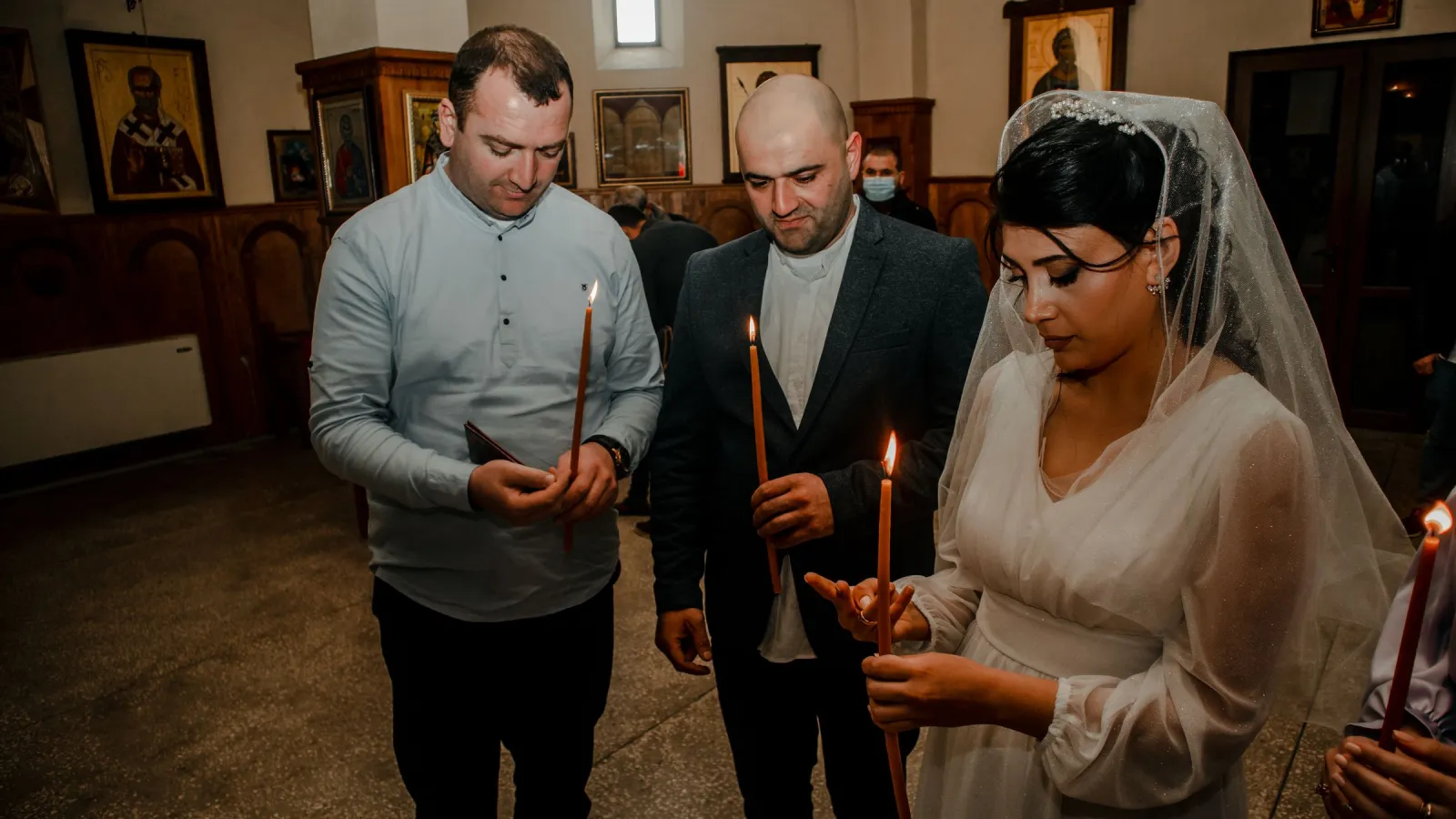
Macedonian Orthodox Wedding Ceremony: 2026 Guide
What the Macedonian Orthodox Church asks for, what the church fee is, who buys the wedding candles and which 2026–2027 dates are closed for weddings.
· 14 min read
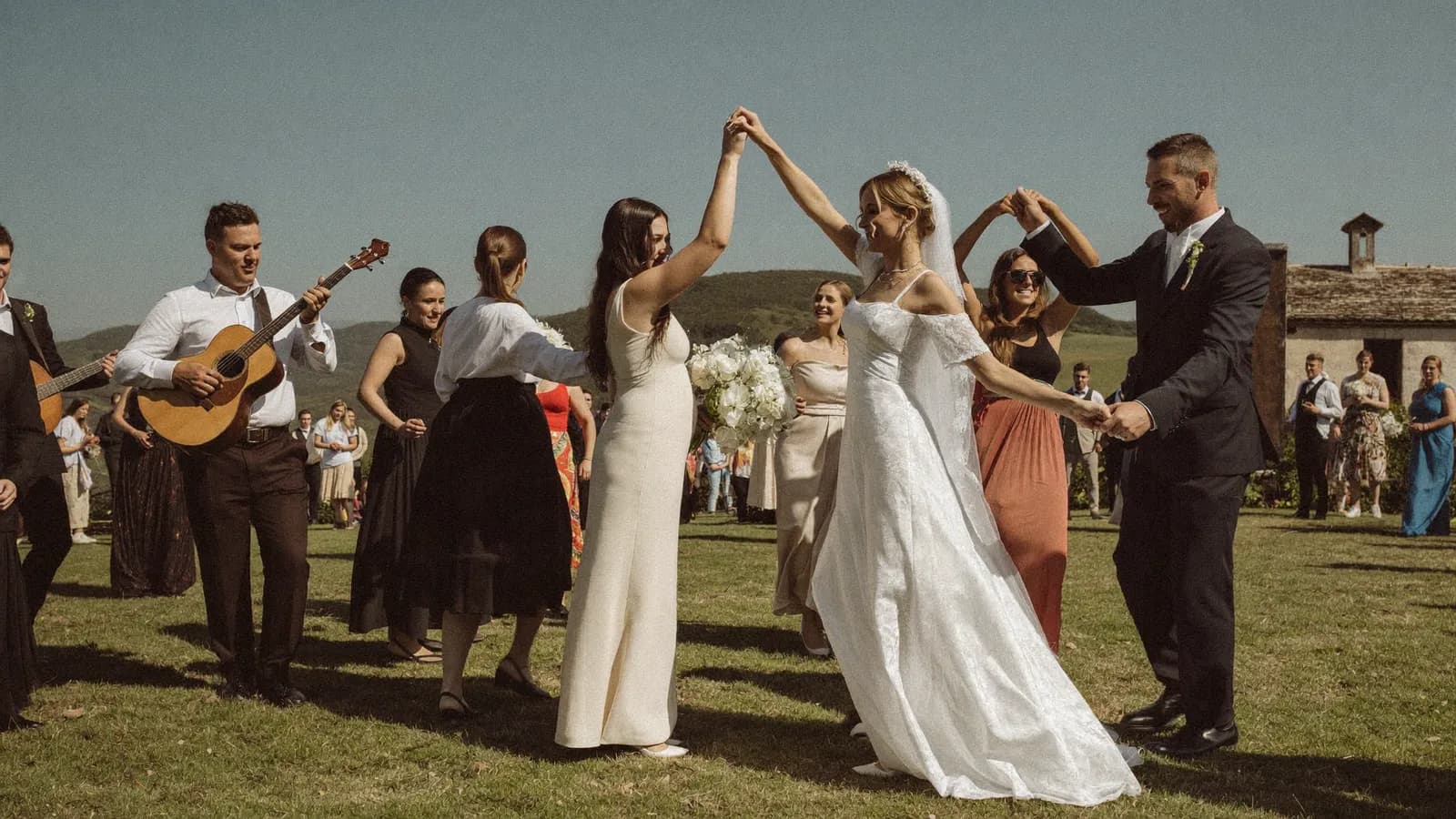
Macedonian Wedding Traditions: A 2026 Guide
Kum, star svat, dever, fetching the bride, the oro and the money gift — what each custom means, how the day runs and what is actually required.
· 10 min read

Wedding Catering in North Macedonia: 2026 Price Guide
Wedding catering in North Macedonia in 2026: published prices per guest, the hidden costs, how many waiters you need and how to check a caterer's registration.
· 14 min read